ErecPower Official Website › Blog › Chrysin
Chrysin And The Bioavailability Problem
It inhibits aromatase in a test tube and almost none of an oral dose gets past the gut wall. The one human trial, the review devoted to the absorption problem, and why we say nobody should buy this for the chrysin.
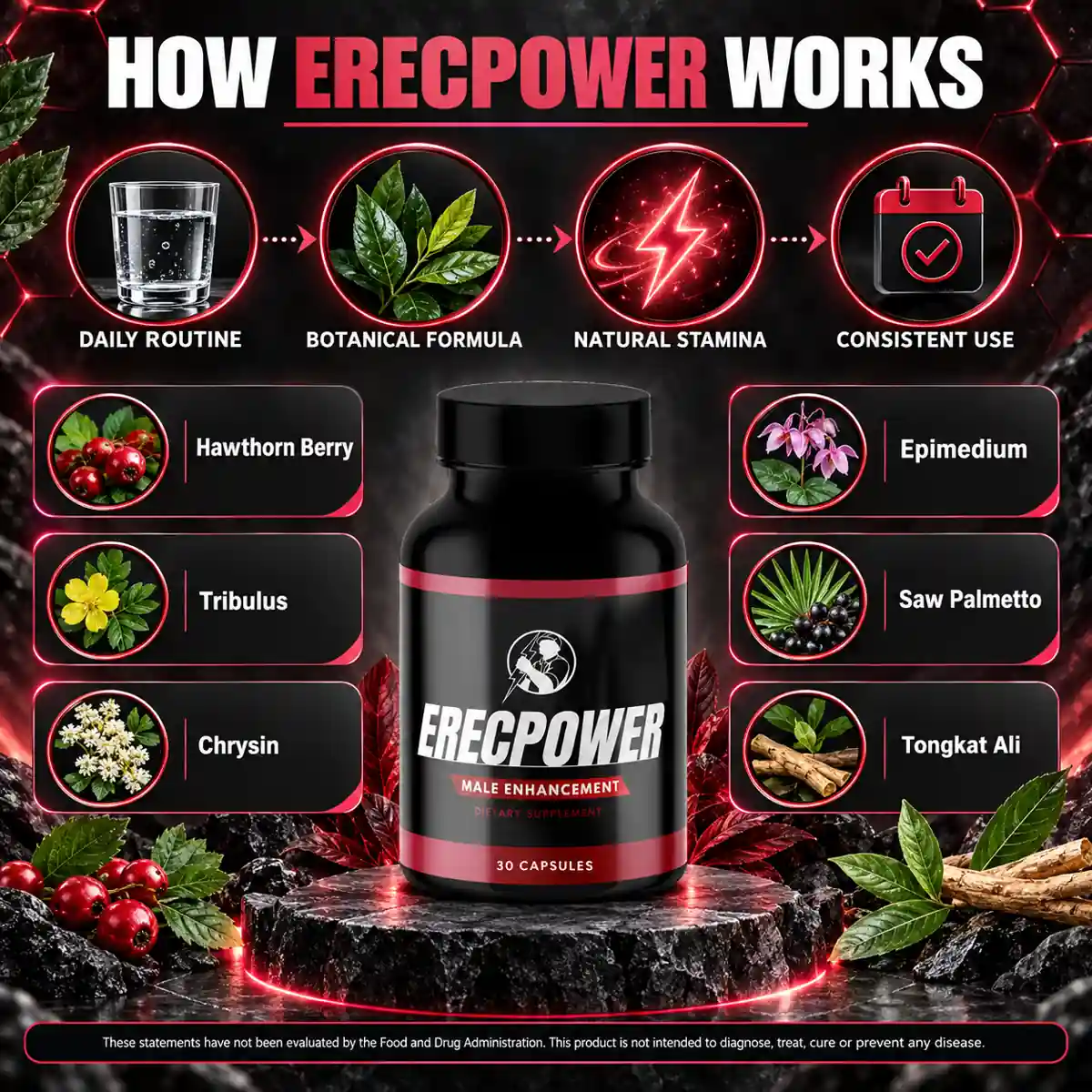
- The test-tube result is real. Chrysin inhibits aromatase, the enzyme that converts testosterone to oestradiol.
- The human result is not. The one published human trial measured urinary testosterone and found no change.
- The reason is absorption. Chrysin is conjugated in the gut wall and the liver before it reaches circulation. An entire review exists on the problem.
- Formulation can fix it, in principle. None of those approaches is named on this label.
- Nobody should buy this product for the chrysin. That is our conclusion about an ingredient in a product we sell.
General information, not medical advice. ErecPower is a dietary supplement for healthy adults aged 18 and over. It is not a drug, it is not FDA-approved, and it is not intended to diagnose, treat, cure or prevent any disease. Persistent difficulty with erections is frequently the first visible sign of a vascular, hormonal or medication problem a clinician can measure and often treat. If it is new or persistent, see a doctor rather than a sales page, including this one. Speak to a pharmacist before adding anything to a prescription.
Why chrysin is on a men’s panel at all
Chrysin has one job in a supplement formula, and it is a job the marketing rarely states directly. It is there as an aromatase inhibitor: a substance meant to reduce the conversion of testosterone into oestradiol, and therefore to leave more testosterone circulating.
That is a clean, intuitive story and it is why chrysin has been in men’s formulas for thirty years. It is also a story that stops at the gut wall, which is what this article is about.
What chrysin is
Chrysin is 5,7-dihydroxyflavone, a flavone found in passionflower, in honey and in propolis. It is not a rare compound and it is not an exotic one. As a supplement ingredient it is usually supplied as an isolated powder rather than as a plant extract.
Like most flavonoids it does interesting things in a dish: it is an antioxidant, it modulates several enzyme systems, and it has been examined for a long list of potential uses, most of which remain potential.
The aromatase story, told properly
Aromatase is the enzyme that converts androgens to oestrogens. In men it is the route by which a fraction of testosterone becomes oestradiol, and it is a genuine pharmacological target: aromatase inhibitors are real prescription drugs, used mainly in oncology.
Chrysin inhibits aromatase in vitro. That result is well replicated and it is not in dispute. The trouble is the word in vitro, which means the enzyme and the compound were put in direct contact in a controlled preparation. It says nothing about whether the compound can reach the enzyme in a person who swallowed it.
NCCIH's Know the Science pages are a good short course in exactly this distinction, and it is the most useful reading habit anybody can take away from this aisle: a mechanism demonstrated in a dish is a hypothesis about a person, not a finding about one.
The human trial, and what it measured
Somebody did test it. Gambelunghe and colleagues, in 2003, published in the Journal of Medicinal Food, gave chrysin to human males and measured urinary testosterone.
There was no change.
One small study is not the last word on anything, and it is fair to say so. But it is the only word, it points the same way the pharmacokinetics point, and twenty-three years have passed without anybody publishing a contradiction. In a category where an ingredient is often sold on nothing but a mechanism, having a negative human result is unusual, and ignoring it would be a choice.
| Level of evidence | What it shows | How much it tells you about a capsule |
|---|---|---|
| Enzyme assay in vitro | Aromatase inhibition, well replicated | Very little on its own |
| Animal studies | Mixed results, often with injected or very high oral doses | Limited, because the absorption problem differs by species |
| Human pharmacokinetics | Very low plasma concentration after an oral dose | A great deal, and it is unflattering |
| Human outcome trial | One study, urinary testosterone, no change | The most relevant single result there is |
| Trials of this capsule | None exist | Nothing |
The pattern is common in this aisle: strong at the bottom of the table, absent at the top, and marketed from the bottom row upwards.
First-pass metabolism, in plain terms
Here is the mechanism that undoes the mechanism.
When you swallow a flavonoid, it does not travel straight into the bloodstream. It crosses the wall of the small intestine, which is lined with enzymes whose job is to attach chemical handles to foreign molecules so the body can dispose of them. Then whatever survives goes directly to the liver, which does more of the same. Only then does the remainder reach general circulation.
For chrysin this process is unusually efficient. Glucuronidation and sulfation in the gut wall and liver conjugate the great majority of an oral dose, and the plasma concentrations that result are a small fraction of what the enzyme work required. Gao and colleagues published an entire review devoted to the problem and to the strategies being investigated to get around it, which is not something anybody writes about a compound that absorbs well.
- Swallowed: a stated amount of chrysin.
- Through the gut wall: most of it conjugated on the way.
- Through the liver: most of the remainder conjugated again.
- In circulation: a small fraction, mostly as conjugates rather than as free chrysin.
- At the enzyme: far less than the in vitro work used.
The honest way to read a six-botanical panel
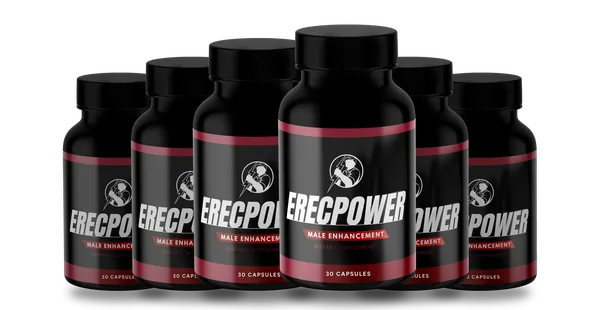
ErecPower names six. This article is about the weakest of them, published on the website that sells it, because a panel is only as believable as its worst row.
$49 to $89 a bottle · 60-day money-back window
Order ErecPowerThe formulation fixes, and why none is on this label
The bioavailability problem is not unsolvable. Formulation science has several approaches to exactly this class of compound, and the review cited above spends most of its length on them.
Broadly, they fall into four groups. Particle size reduction, which increases the surface area available for absorption. Complexation with carriers such as cyclodextrins. Encapsulation in lipid or polymer systems. And co-administration with compounds that inhibit the conjugating enzymes, the best-known dietary example being piperine from black pepper.
None of those is named on this label. There is no mention of a carrier, no mention of a delivery system, no piperine, and of course no amount of chrysin either. In the absence of any of that, the reasonable assumption is plain chrysin powder, which is the form the human trial found did nothing.
The bigger point about oestrogen and male sexual function
Step back from chrysin for a moment, because there is a premise underneath it worth examining.
The aromatase-inhibitor pitch assumes that less oestradiol in a man is straightforwardly better. That is not what the endocrinology says. Corona's 2022 review of androgens and male sexual function sets out a more complicated picture in which testosterone is one input among several and oestradiol has its own necessary roles, including in bone and in libido itself. Pushing one hormone around in isolation is not obviously desirable even when it works.
Which makes the chrysin story an odd one twice over: an ingredient that probably does not do the thing, aimed at an outcome that is not clearly the right thing to aim at. The 2022 scoping review of non-pharmacological interventions is a useful corrective here, because the things it found actually move male hormonal measures are sleep, body composition, alcohol and exercise.
What to do with this information
Nothing dramatic. Chrysin is not dangerous, it is not an adulterant, and its presence does not make the rest of the panel worse. It is a filler ingredient with a good story and a bad absorption profile, and it is extremely common in this category for exactly that reason.
What it should change is how you weigh a panel. Six named botanicals sounds like more product than three, and a 2021 review of ingredients in popular male supplements is a good reminder that name count and evidence are close to unrelated. On this panel, tongkat ali is the name doing the work; chrysin is the name doing the marketing.
It should also change how you read the absent amounts. If the six are sharing one capsule, every milligram of chrysin is a milligram not spent on something with a better case. The article on what will physically fit works that arithmetic through.
The verdict
Nobody should buy this product for the chrysin. It is the weakest item on the panel, the human evidence is a single negative study, the pharmacokinetics explain why, and the label names none of the formulation approaches that might change the answer.
We sell this product, and that paragraph is the one that costs us something. It is here because a panel is only as believable as its worst row, and pretending the worst row is fine is how a website stops being worth reading on the good rows. The ingredients page says the same thing in shorter form, and the nine-point checklist scores the whole product including the rows it fails.
Sources cited in this article
- Gambelunghe C, Rossi R, Sommavilla M, et al. Effects of chrysin on urinary testosterone levels in human males. J Med Food. 2003;6(4):387-90. https://pubmed.ncbi.nlm.nih.gov/14977449/
- Gao S, Siddiqui N, Etim I, et al. Developing nutritional component chrysin as a therapeutic agent: bioavailability and pharmacokinetics consideration, and ADME mechanisms. Biomed Pharmacother. 2021;142:112080. https://pubmed.ncbi.nlm.nih.gov/34449320/
- Kuchakulla M, Narasimman M, Soni Y, et al. A systematic review and evidence-based analysis of ingredients in popular male testosterone and erectile dysfunction supplements. Int J Impot Res. 2021;33(3):311-317. https://pubmed.ncbi.nlm.nih.gov/32358510/
- Corona G, Rastrelli G, Vignozzi L, et al. Androgens and male sexual function. Best Pract Res Clin Endocrinol Metab. 2022;36(4):101615. https://pubmed.ncbi.nlm.nih.gov/35153145/
- National Center for Complementary and Integrative Health. Know the science: how to make sense of health research. https://www.nccih.nih.gov/health/know-science
- Santos HO, Cadegiani FA, Forbes SC. Nonpharmacological interventions for the management of testosterone and sperm parameters: a scoping review. Clin Ther. 2022;44(8):1129-1149. https://pubmed.ncbi.nlm.nih.gov/35810031/
Every page, every journal post, the bottle facts and the ingredients go through review by Dr. Goldwyn Foggie (Dr. Goldie), MD before they ship. We write from the printed ErecPower bottle, the manufacturer’s own listing artwork and this desk’s stock paperwork, cite public research beside the amount that research actually used, and print “not published” wherever a figure is not disclosed rather than estimating it. This label publishes no amount for any of its six botanicals, and that fact appears in every article that names one. Corrections are made on the page itself and the review date moves forward. Write to [email protected]. Last updated September 17, 2026.