ErecPower Official Website › Blog › Six herbs in one capsule
Six Herbs In One Capsule: What Will Actually Fit
A size-0 capsule holds 400 to 500 mg. The trial doses for these six botanicals add to well over three grams a day. What that arithmetic does and does not prove.
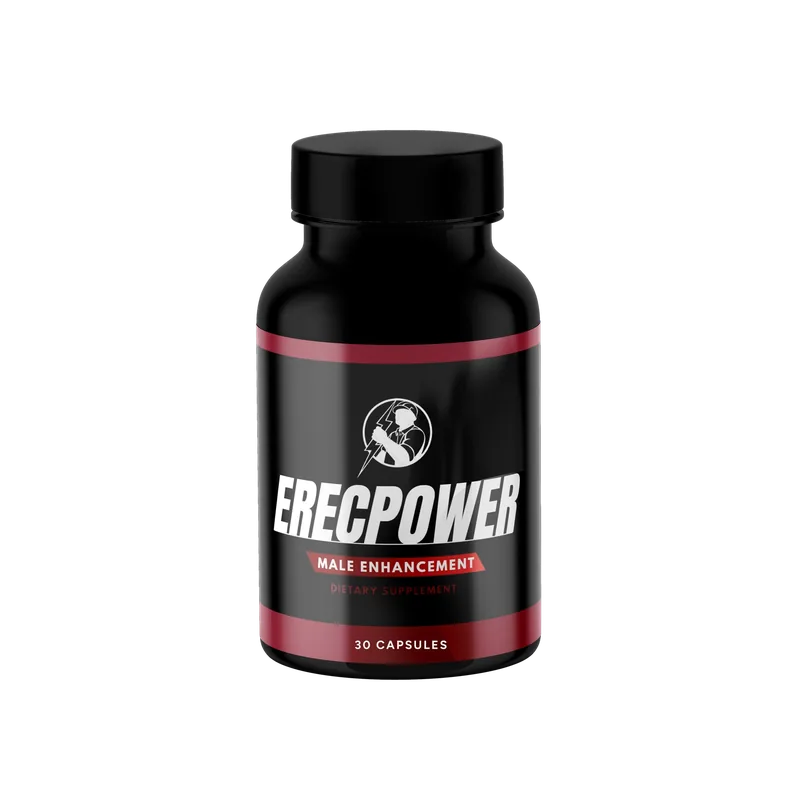
- A size-0 capsule holds roughly 400 to 500 mg of typical plant powder.
- The trial doses for these six add to well over 3 g a day between them.
- So one capsule cannot deliver trial doses of six botanicals. That is arithmetic, not an accusation.
- It does not follow that the capsule is useless. It follows that the research figures cannot be read onto it.
- The label could resolve all of this by printing six numbers. It prints none.
General information, not medical advice. ErecPower is a dietary supplement for healthy adults aged 18 and over. It is not a drug, it is not FDA-approved, and it is not intended to diagnose, treat, cure or prevent any disease. Persistent difficulty with erections is frequently the first visible sign of a vascular, hormonal or medication problem a clinician can measure and often treat. If it is new or persistent, see a doctor rather than a sales page, including this one. Speak to a pharmacist before adding anything to a prescription.
The question nobody asks
A supplement label names six botanicals. The instinct is to read that as more product rather than less, and the marketing depends on that instinct. Six plants sounds comprehensive. Six plants sounds like coverage.
The question almost nobody asks is the physical one: how much of six different plant extracts will actually fit inside one capsule, and how does that compare with the amounts the research used? It is answerable with arithmetic rather than with chemistry, and the answer is more useful than most of what is written about this category.
How much a capsule actually holds
Capsule shells come in standard sizes, and the volumes are fixed. The two most common in supplements are size 0 and size 00.
| Size | Approximate volume | Typical plant powder fill |
|---|---|---|
| Size 1 | 0.50 ml | roughly 300 to 400 mg |
| Size 0 | 0.68 ml | roughly 400 to 500 mg |
| Size 00 | 0.91 ml | roughly 600 to 800 mg |
| Size 000 | 1.37 ml | roughly 1,000 mg or a little more |
Fill weight depends on the density of the powder, which is why these are ranges rather than figures. A dense mineral fills heavier than a fluffy leaf powder. This label does not state its capsule size, so size 0 is used below as the ordinary supplement default.
Two things are worth noticing. A capsule is small. And part of that volume is not formula at all: flow agents, anti-caking agents and fillers are needed to make a powder behave in a filling machine, and they occupy space.
What the trials used, added up
Now the other side of the sum. These are the daily amounts the published research on each of these six botanicals actually ran on.
| Botanical | Daily amount in the published trials | Source |
|---|---|---|
| Hawthorn | 160 to 1,800 mg of standardised extract | Cochrane review |
| Tribulus | 750 to 1,500 mg of standardised extract | Kamenov 2017 |
| Chrysin | 3 mg per kilogram a day, so roughly 250 mg for an 80 kg man | Gao 2021 |
| Epimedium | no established human dose | category review |
| Saw palmetto | 320 mg of the lipidosterolic extract | Cochrane review |
| Tongkat ali | 100 to 600 mg of standardised root extract | 2022 meta-analysis |
Taking the LOW end of every range, and leaving epimedium at zero because no human dose is established, the five that have one come to roughly 1,580 mg a day.
The arithmetic, done plainly
Low end of every range, epimedium counted as zero: roughly 1,580 mg a day. Middle of the ranges: comfortably over 3 g. High end: over 4 g.
A size-0 capsule holds roughly 400 to 500 mg of plant powder, before any excipient. One capsule a day is the routine this bottle’s own numbers describe.
So the low-end total is about three times what one capsule can hold, and the mid-range total is six to eight times. There is no arrangement of six botanicals inside one size-0 capsule that delivers the doses the trials used.
This is arithmetic, not an accusation. Nothing above says the manufacturer has done anything improper, and nothing above is a claim about what is in the capsule, which nobody outside the factory knows. It is a statement about what is physically possible, and it applies equally to every six-ingredient single-capsule formula in this aisle.
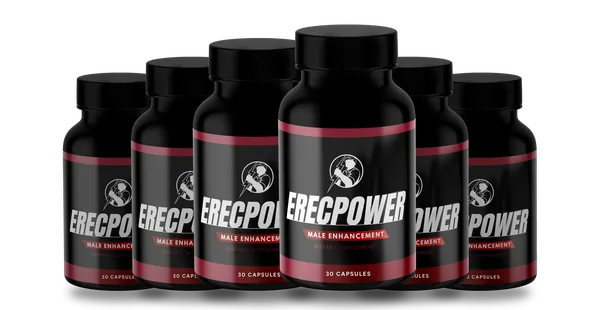
A six-botanical panel in one capsule a day
This article is the arithmetic behind that sentence, published by the desk that sells the capsule. The label could settle it by printing six numbers.
$49 to $89 a bottle · 60-day money-back window
Order ErecPowerFour fair objections to this argument
There are real counter-arguments and they deserve to be stated properly rather than waved at.
“Concentrated extracts weigh less.” True, and important. A 10:1 extract delivers the constituents of ten times its weight in raw herb, so 50 mg of extract may be equivalent to 500 mg of powder. But the trial doses in the table above are mostly doses of standardised extract already, not of raw herb, so this does not close the gap as much as it first appears. And the extract ratio is another figure this label does not print.
“The trial doses might be higher than necessary.” Also possible. Dose optimisation is rare in botanical research and many trial doses are conventional rather than derived. But an untested lower dose is a hypothesis, not a finding, and a product cannot claim a trial result at a dose the trial did not use.
“The capsule might be size 00.” It might. That would take the ceiling to roughly 600 to 800 mg, which changes the multiple without changing the conclusion. The label does not state a size.
“Synergy.” The idea that small amounts of several botanicals combine to produce an effect none would produce alone. It is not impossible and it is not demonstrated, and in this category it functions mainly as an explanation for why the amounts are small. Treat it as a hypothesis with no trial behind it, because that is what it is.
What actually follows from it
Three things, and the third is the one people skip to wrongly.
The research figures cannot be read onto this capsule. When a page says tongkat ali raised serum total testosterone in pooled clinical trials, that is a statement about 100 to 600 mg a day of a standardised root extract. It is not a statement about an unstated fraction of a shared capsule.
Ingredient count is not a quality signal. On a fixed volume, more names means less of each. A three-ingredient capsule at meaningful amounts is a better product than a twelve-ingredient capsule at trace amounts, and the twelve will look more impressive on a shelf.
It does not follow that the capsule does nothing. This is the wrong conclusion to draw and it is the easy one. Nobody outside the factory knows the amounts. It may contain a meaningful amount of two or three actives and traces of the rest, which would be an ordinary and not dishonest formulation. The point is that you cannot tell, and the label is what would let you.
What the label could print instead
All of this is resolvable, and cheaply. A fully disclosed panel for this product would carry six rows of milligrams, the plant part for each, the standardisation marker and percentage, the extract ratio, and the other-ingredients list. Plenty of supplement brands print all of that.
- Amount per capsule, for each of the six. The row that does the most work.
- Plant part. Berry or leaf and flower for hawthorn changes which trials apply.
- Standardisation. Protodioscin for tribulus, eurycomanone for tongkat ali.
- Extract ratio. The difference between 50 mg of a 10:1 extract and 50 mg of powder.
- Other ingredients. The capsule shell, the flow agents, and how much of the fill is not formula.
Until those appear, this article is the closest thing to an answer available, and it is an argument from physics rather than from chemistry. The nine-point checklist makes the same point as a buying test you can apply to any bottle.
Applying this to any panel, not just this one
The method transfers, and it is the most useful thing to take away from this page. Next time you pick up a bottle in this aisle, do three things.
Count the ingredients and read the serving size. Multiply the count by a typical trial dose for that class of ingredient, or look one up: MedlinePlus keeps monographs on most common botanicals, and the NIH Office of Dietary Supplements explains what every row of a Supplement Facts panel is for. Then compare the total with what the stated number of capsules can physically hold.
If the answer is that the formula would need four capsules a day to reach trial doses and the label says one, you have learned something real about the product in under a minute, and you have learned it without trusting anybody’s marketing.
The verdict
Six botanicals cannot be delivered at trial doses in one size-0 capsule. That is true of this product and true of most six-ingredient single-capsule formulas in this category, and it is a reason to treat ingredient count as a marketing decision rather than a quality one.
What it is not is proof that the capsule contains nothing useful. It is proof that the label is the only thing that could tell you, and that this one does not. The ingredients page sets the six names against their trial doses in a single table, which is the shorter version of everything above.
Sources cited in this article
- Leisegang K, Finelli R, Sikka SC, et al. Eurycoma longifolia (Jack) improves serum total testosterone in men: a systematic review and meta-analysis of clinical trials. Medicina (Kaunas). 2022;58(8):1047. https://pubmed.ncbi.nlm.nih.gov/36013514/
- Franco JVA, Trivisonno LF, Sgarbossa N, et al. Serenoa repens for the treatment of lower urinary tract symptoms due to benign prostatic enlargement: an updated Cochrane review. World J Mens Health. 2024;42(3):518-530. https://pubmed.ncbi.nlm.nih.gov/38164033/
- Kamenov Z, Fileva S, Kalinov K, et al. Evaluation of the efficacy and safety of Tribulus terrestris in male sexual dysfunction: a prospective, randomized, double-blind, placebo-controlled clinical trial. Maturitas. 2017;99:20-26. https://pubmed.ncbi.nlm.nih.gov/28364864/
- Pittler MH, Guo R, Ernst E. Hawthorn extract for treating chronic heart failure. Cochrane Database Syst Rev. 2008;2008(1):CD005312. https://pubmed.ncbi.nlm.nih.gov/18254076/
- Gao S, Siddiqui N, Etim I, et al. Developing nutritional component chrysin as a therapeutic agent: bioavailability and pharmacokinetics consideration, and ADME mechanisms. Biomed Pharmacother. 2021;142:112080. https://pubmed.ncbi.nlm.nih.gov/34449320/
- Kuchakulla M, Narasimman M, Soni Y, et al. A systematic review and evidence-based analysis of ingredients in popular male testosterone and erectile dysfunction supplements. Int J Impot Res. 2021;33(3):311-317. https://pubmed.ncbi.nlm.nih.gov/32358510/
- National Institutes of Health, Office of Dietary Supplements. Dietary supplements: what you need to know. https://ods.od.nih.gov/factsheets/WYNTK-Consumer/
- MedlinePlus, U.S. National Library of Medicine. Herbs and supplements. https://medlineplus.gov/druginfo/natural/699.html
Every page, every journal post, the bottle facts and the ingredients go through review by Dr. Goldwyn Foggie (Dr. Goldie), MD before they ship. We write from the printed ErecPower bottle, the manufacturer’s own listing artwork and this desk’s stock paperwork, cite public research beside the amount that research actually used, and print “not published” wherever a figure is not disclosed rather than estimating it. This label publishes no amount for any of its six botanicals, and that fact appears in every article that names one. Corrections are made on the page itself and the review date moves forward. Write to [email protected]. Last updated September 17, 2026.